
A Step-by-Step Guide to Building Leadership for Today’s AI-Driven Teams
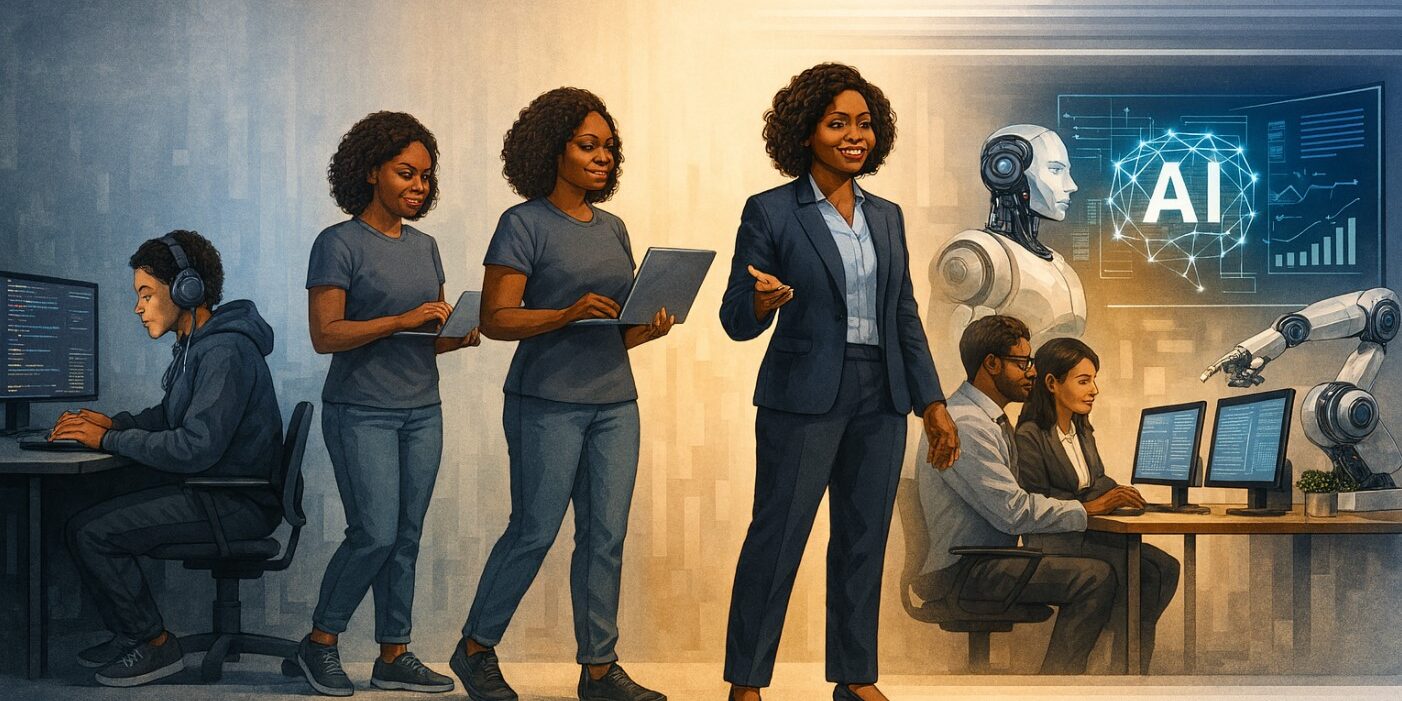
Promoting top technical talent into management roles is a common practice—but it’s also a problem few organizations address head-on. The logic seems sound: if someone excels at building systems, analyzing data, or solving complex technical challenges, they’ll be a natural leader. In reality, this transition is rarely straightforward. We’ve observed across industries that high-performing technical experts are thrust into people management, executive communication, and AI-enabled oversight without adequate support or preparation.
The fallout isn’t just stressed managers. Teams stall, AI tools go underutilized, and risks multiply. The underlying issue? Management itself has changed. Today’s managers aren’t just leading people—they’re orchestrating human + AI systems. This new reality requires managers who can:
- Coach and develop individuals with diverse skill sets and learning curves
- Make decisions where AI influences speed, quality, and scale
- Take ownership of outcomes, even as automation expands
The Most Common Gaps for New Managers
When organizations don’t prepare technical contributors for these demands, three gaps emerge:
- People leadership gaps: Delegation, feedback, prioritization, and performance conversations aren’t second nature for most technical experts.
- Decision translation gaps: Strong contributors often struggle to explain tradeoffs, risks, and impacts to non-technical leaders.
- AI oversight gaps: New managers are told to “use AI,” but rarely taught how to supervise it—when to trust outputs, when to intervene, and how to set boundaries.
This is why AI adoption often becomes fragmented: tools are deployed, but accountability and confidence lag behind.
A Better Approach: Sequencing the Transformation
Turning technical contributors into effective managers isn’t a one-off training event. It’s a sequenced capability shift that integrates people leadership and AI oversight. At Mind Over Machines, we recommend the following practical steps:
Redefine “manager” expectations:
- From individual problem solver → team capacity builder
- From technical expert → decision owner
- From tool user → AI supervisor
This reframing helps reduce burnout and confusion, legitimizing the shift away from “doing it all myself.”
Build core people-management skills first:
- Set clear goals and priorities
- Delegate outcomes, not just tasks
- Give timely, constructive feedback
- Coach rather than fix
With this foundation, AI tools enhance productivity instead of amplifying dysfunction.
Add AI management as a leadership skill:
- Decide when AI should assist versus when humans must lead
- Review AI outputs for accuracy, bias, and appropriateness
- Set norms for responsible, transparent AI use
- Establish escalation paths for AI-related risks
This is where governance, ethics, and leadership intersect—and where guidance is most needed.
Reinforce learning through real work:
- Mentored management scenarios
- Real AI-enabled workflow experiments
- Structured reflection on successes and failures
Applying new skills in real situations turns theory into muscle memory.
What Success Looks Like
Organizations that intentionally prepare technical contributors for modern management see:
- Managers spending more time coaching, less time firefighting
- Teams adopting AI tools with clearer accountability and fewer mistakes
- Improved decision-making, even as work accelerates
- Top technical talent staying engaged instead of burning out
The takeaway: AI readiness is a leadership challenge, not a tooling problem. Productivity follows when managers are equipped to lead people and supervise intelligent systems.
Practical Next Steps
- Assess readiness: Identify who’s stepping into leadership and where gaps exist—in both human and AI domains.
- Design a staged path: Start with people leadership, add AI oversight second—avoid overwhelming new managers.
- Define meaningful metrics: Track team clarity, decision quality, responsible AI use, and manager focus on coaching.
- Reinforce continuously: Management in an AI-enabled workplace is dynamic. Support it as it evolves.
A Durable Perspective
The future manager isn’t the smartest person in the room. They’re the one who can grow people, guide AI responsibly, and make sound decisions where the two intersect. That’s the leadership capability organizations need now—and it’s one that can be intentionally built.